Insert Coin to Feel Alive: The Barcade Boom That's Making Friday Nights Weird Again

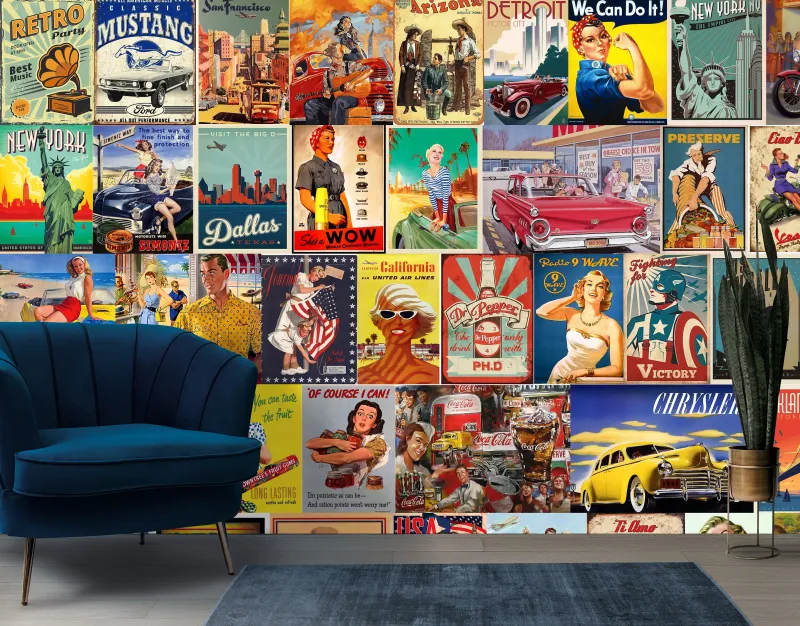
Photo: neon lit retro arcade bar vintage gaming machines people playing pinball, via wallpapers.com
Somewhere between a first date and a midlife crisis, the retro arcade bar has quietly become America's most unexpectedly perfect night out. Craft cocktails, blinking neon, and the soul-satisfying thunk of a pinball machine — the barcade is having its moment, and Gen Z is absolutely losing it over Pac-Man.
Let's set the scene. It's a Friday night in any mid-to-large American city. You walk past a darkened doorway pulsing with the unmistakable 8-bit soundtrack of Galaga, step inside, and find yourself in a room that somehow feels like 1984 and 2024 at the same time. To your left, a bartender with sleeve tattoos is muddling something artisanal. To your right, a twenty-three-year-old is absolutely destroying the high score on Donkey Kong. Overhead, neon signs cast everyone in a flattering, slightly surreal glow. You have, my friend, entered the barcade. And you are not leaving until last call.
The Unlikely Love Story Between Craft Beer and Pac-Man
The barcade concept — a bar stocked with vintage arcade machines and pinball tables, usually free-to-play after a cover charge — has been percolating since the early 2010s, but the last few years have seen genuine explosive growth. According to industry observers, the number of dedicated arcade bars in the US has more than doubled since 2019, with new spots opening in cities from Portland, Oregon to Nashville, Tennessee to Columbus, Ohio.
What changed? A lot of things, simultaneously.
The pandemic, strange as it sounds, lit the fuse. When social venues reopened, people were ravenous for experiences that felt different — not just another bar with a playlist and a happy hour. They wanted something to do with their hands, something to compete over, something that sparked actual conversation. Vintage arcade machines, it turns out, are extraordinarily good at all three.
"A cocktail alone doesn't give people a reason to stay," explains Jordan Reyes, co-owner of Token, a barcade that opened in Denver in 2022 and now regularly has weekend wait times stretching past an hour. "But put a Street Fighter II cabinet next to the bar and suddenly people are here for three hours, talking trash, laughing, having the time of their lives. The games are the social lubricant. The drinks are almost secondary."
Almost.
Why Gen Z Can't Get Enough of Something They Never Had
Here's the delightful paradox at the heart of the barcade boom: the generation most enthusiastically embracing these venues has no actual nostalgia for them. Gen Z — those born roughly between 1997 and 2012 — was not haunting mall arcades in 1988. They weren't feeding quarters into Ms. Pac-Man cabinets while their parents browsed the Sears catalog. And yet, they are the demographic most likely to post about barcades on TikTok, tag locations on Instagram, and plan entire birthday celebrations around them.
Social researcher and pop culture commentator Dana Ellsworth has a theory. "Gen Z is the first generation to grow up entirely inside the digital world," she says. "They don't experience technology as new or exciting — it's just the air they breathe. What feels novel and tactile to them is the analog stuff. Physical buttons. A joystick with actual resistance. A machine that makes noise when you win. It's the same reason they're buying vinyl and film cameras. It feels real in a way that a phone screen doesn't."
There's also the aesthetic dimension, which you simply cannot overstate. A barcade, done right, is a photographer's fever dream. Neon signs in every color. The glow of CRT monitors stacked against dark walls. Cabinet art featuring lurid, wonderful illustrations of space invaders and kung-fu fighters. Every corner is a potential Instagram post, and Gen Z knows a good backdrop when it sees one.
"We designed this place to be photographed," admits Reyes, unapologetically. "Every neon sign, every piece of cabinet placement, every lighting decision — we asked ourselves, 'does this look incredible in a photo?' Because if it does, our customers become our marketing team. And they absolutely do."
The Perfect Date Night Formula
Ask any barcade regular about the date night angle and you'll get immediate, enthusiastic agreement. The genius of the format as a romantic venue is almost architectural.
First, there's always something to do, which eliminates the dreaded staring-at-each-other-over-drinks awkward silence. Second, games create natural moments of competition, collaboration, celebration, and gentle ribbing — all of which are excellent for building chemistry. Third, the noise level encourages leaning in close to talk, which, well. You know.
"I went on a first date here and we played skee-ball for two hours," says Chicago resident Marisol Vega, 26, who has since been to Emporium (Chicago's beloved multi-location barcade institution) more times than she can count. "By the end of the night I knew exactly what kind of person he was — how he handled losing, whether he was a good sport, if he could laugh at himself. You learn more about someone in an arcade than you do in three dinner dates."
Barcade owners have noticed this dynamic and leaned into it hard. Many venues now offer date-night packages, host speed-dating events built around game tournaments, and curate their machine selection specifically to include cooperative games alongside competitive ones.
Building the Perfect Barcade: It's Harder Than It Looks
For all the romance of the concept, running a barcade is genuinely complex. Vintage arcade machines are temperamental beasts — they require constant maintenance, specialized parts that are increasingly hard to source, and staff who know their way around a circuit board.
"We have a full-time technician," says Reyes. "Full-time. Just for the machines. People don't think about that when they picture opening one of these places. They think about the fun. They don't think about the fact that a Pac-Man cabinet from 1980 is forty-four years old and it will absolutely let you know about it."
Curation matters enormously, too. The best barcades mix iconic titles — Pac-Man, Centipede, Mortal Kombat, Tetris — with deeper cuts that reward the knowledgeable and surprise the uninitiated. Pinball machines are non-negotiable; their mechanical complexity and physical feedback offer something entirely different from video games, and serious pinball communities have formed around barcades in cities like Seattle, Philadelphia, and Austin.
The Neon Future of a Pixelated Past
The barcade boom shows no signs of dimming. If anything, as the concept matures, operators are getting more ambitious — adding full kitchens, hosting competitive gaming leagues, building private event spaces around arcade themes, and partnering with craft breweries for exclusive venue-only tap lists.
What's most striking, though, is the genuine joy these places generate. In a cultural moment that often feels relentlessly anxious and screen-fatigued, there's something almost radical about a room full of people — different ages, backgrounds, and levels of gaming skill — collectively losing their minds over a forty-year-old video game.
Insert coin. Press start. Feel human again.
You've earned it.