Dog-Ear This Moment: Why Bookstore Cafés Are the Hottest Hangout Spots Nobody Saw Coming
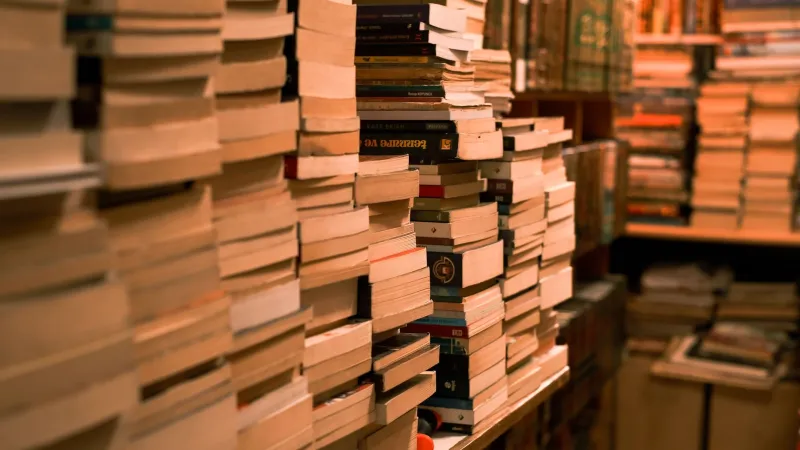
Something strange is happening in cities and small towns across America. On a random Tuesday afternoon, the kind of Tuesday that used to mean mindlessly doomscrolling through lunch, people are instead wedged into overstuffed armchairs, noses buried in actual physical books, cradling ceramic mugs like precious artifacts. The WiFi password is scrawled on a chalkboard somewhere near the register, but nobody seems to be asking for it.
Welcome to the bookstore café revival, baby. It's cozy, it's a little dusty in the best possible way, and it is absolutely, undeniably having a moment.
The Numbers Don't Lie (But They Do Surprise)
Independent bookstores in the United States have been quietly staging one of the great commercial comebacks of the modern era. According to the American Booksellers Association, the number of indie bookshops has grown steadily over the past decade, bouncing back from what many predicted would be a terminal Amazon-inflicted decline. But the real secret weapon in this resurgence? The café counter.
Shop owners from Portland, Oregon to Portland, Maine are reporting the same jaw-dropping phenomenon: foot traffic that rivals their best pre-pandemic years, sustained not just by book buyers, but by people who simply want to be somewhere that feels human. Somewhere with the smell of coffee and old paper instead of the smell of, well, nothing, which is what the internet smells like.
"We added six tables and an espresso machine three years ago and genuinely thought we were taking a wild risk," says one owner of a beloved indie shop in Asheville, North Carolina. "Now on Saturday afternoons I'm turning people away. People want to sit. They want to stay. They want to put their phone in their bag and just... exist for a while."
Exist! For a while! Revolutionary!
The Paperback Is Having Its Revenge Tour
Here's the part that would have seemed absolutely unhinged to predict circa 2012, when everyone was confidently eulogizing the physical book: paperbacks are cool again. Like, genuinely, fashionably, unironically cool.
Gen Z, those supposed digital natives who grew up with tablets in their backpacks, are buying physical books at rates that have publishers doing double takes. And it's not just the aesthetics of a prettily spined shelf (though, let's be honest, BookTok has made a strong case for that too). It's the experience of reading something you can hold. Something that doesn't send you a notification. Something that cannot, under any circumstances, auto-play a video.
Millennials, for their part, are returning to paperbacks with the energy of someone who just rediscovered a favorite jacket they thought they'd lost. There's a nostalgia baked into the format — the dog-eared pages, the receipts used as bookmarks, the coffee ring on the back cover that marks a particularly good afternoon. E-readers are efficient. Paperbacks are romantic.
"I read probably forty books on my Kindle between 2015 and 2020," admits one 34-year-old regular at a Chicago bookstore café. "I remember almost none of them. I've read twelve paperbacks in the last year and I could tell you what I was eating when I finished every single one."
Science, it turns out, has some thoughts on this. Researchers studying reading retention have repeatedly found that physical reading tends to support deeper comprehension and memory than screen-based reading. Something about the tactile experience — the weight of the pages, the physical progress of a thumb's-width of story — anchors the brain in a way that a glowing rectangle simply doesn't. Your grandmother's reading habit was neurologically superior. We're all just figuring that out now.
The Sanctuary Effect
Psychologists and behavioral researchers have started using a term that sounds like it was invented specifically for this moment: restorative environments. These are spaces that allow the brain to genuinely rest and recover from the relentless demands of modern attention. Think: natural light, low ambient noise, no urgent pings, a general vibe of nobody needing anything from you immediately.
Bookstore cafés, it turns out, are practically engineered to hit every single marker on that list. The lighting is warm (often suspiciously, gloriously dim). The soundtrack is usually something soft and unobtrusive — jazz, acoustic folk, the occasional rain playlist. The social contract of the space dictates that you leave other patrons alone. It is, in short, one of the last truly guilt-free zones for doing absolutely nothing productive.
"People come in looking stressed and leave looking like they just got back from a weekend retreat," observes one bookshop café owner in Austin, Texas. "I had a woman tell me last month that sitting here for two hours was the first time she'd felt like herself in six months. Over a cortado and a used copy of Anne of Green Gables. I almost cried."
We almost cried writing that. Moving on.
The Art of the Long Afternoon
One of the quietly radical things about the bookstore café renaissance is what it's doing to people's relationship with time. Specifically, unstructured, unoptimized, un-monetized time.
The modern productivity industrial complex has spent roughly fifteen years convincing us that every spare moment should be a hustle, a side project, a self-improvement opportunity. The bookstore café says: what if you just sat there and read a mystery novel for three hours? What if that was the whole plan?
Regulars at these spots describe developing something almost ritualistic around their visits. The same corner seat. The same order. A particular book that only gets read in that specific chair. It's the kind of small, personal ceremony that used to be more common before every leisure activity got gamified or content-ified.
"I don't tell anyone where I'm going," confesses one devotee in Denver. "It's my thing. My two hours. Nobody needs a photo of it. It's just mine."
Just yours! The audacity! The beauty!
How to Find Your Spot (And Why You Should)
If this whole vibe is speaking to something buried and slightly desperate inside of you, good news: the independent bookstore café scene is thriving and findable. The American Booksellers Association's IndieBound directory is a solid starting point. Yelp searches filtered by "bookstore" in your city will surface gems. And honestly, just driving around older commercial neighborhoods in any mid-sized American city and looking for a hand-lettered sign and a window full of paperbacks is a surprisingly effective strategy.
The etiquette is simple: buy something. Even a used paperback for three dollars. These places are run by people who genuinely love books and are working hard to keep the lights on. Tip your barista. Don't hog a four-top alone during peak hours. And for the love of everything holy, maybe leave the laptop at home.
Bring a book. Stay a while. Let your phone get bored.
The paperback is back, the café is calling, and somewhere between the first sip of your oat milk latte and the last page of chapter four, you might just remember what it feels like to be a person in a room, fully, contentedly, gloriously present.
Dog-ear that page. You'll want to come back to it.